Table of Contents
Osceola County Courts, MI *

The court system of Osceola County, MI, is responsible for resolving civil disputes, criminal cases, family matters, landlord disputes, small-claims disputes, probate matters, and other legal actions affecting residents, businesses, and visitors in the county. Court records can be useful to residents, as they can use them to investigate a pending dispute, review case details, prepare for a trial, or review past litigation. Employers and landlords may use court records to perform criminal background checks and check eviction proceedings, respectively. Therefore, it's important to understand how local courts operate and where records are stored, as this helps avoid delays and frustration.
How to Access Osceola County Court Records

 Online Access
Osceola County court records are accessible online through the MiCOURT Case Search portal. This system allows users to search by case number, filing dates, and the names of the parties involved in matters, including civil, criminal, traffic, domestic relations, and probate cases. It's essential to gather as much information about the case as possible before starting the search, which will help expedite the process and ensure search results are accurate.
 Alternative Online Options
If the detailed search does not yield sufficient results and a person doesn't know the court is responsible for the record, then users should opt for CourtCaseFinder. This court case aggregator is the best alternative as it offers access to public court records from across the state. It offers access to numerous court records, including civil, criminal, probate, and family law matters. This tool allows citizens to search multiple jurisdictions, even with little information about the required record.
 In-Person Requests
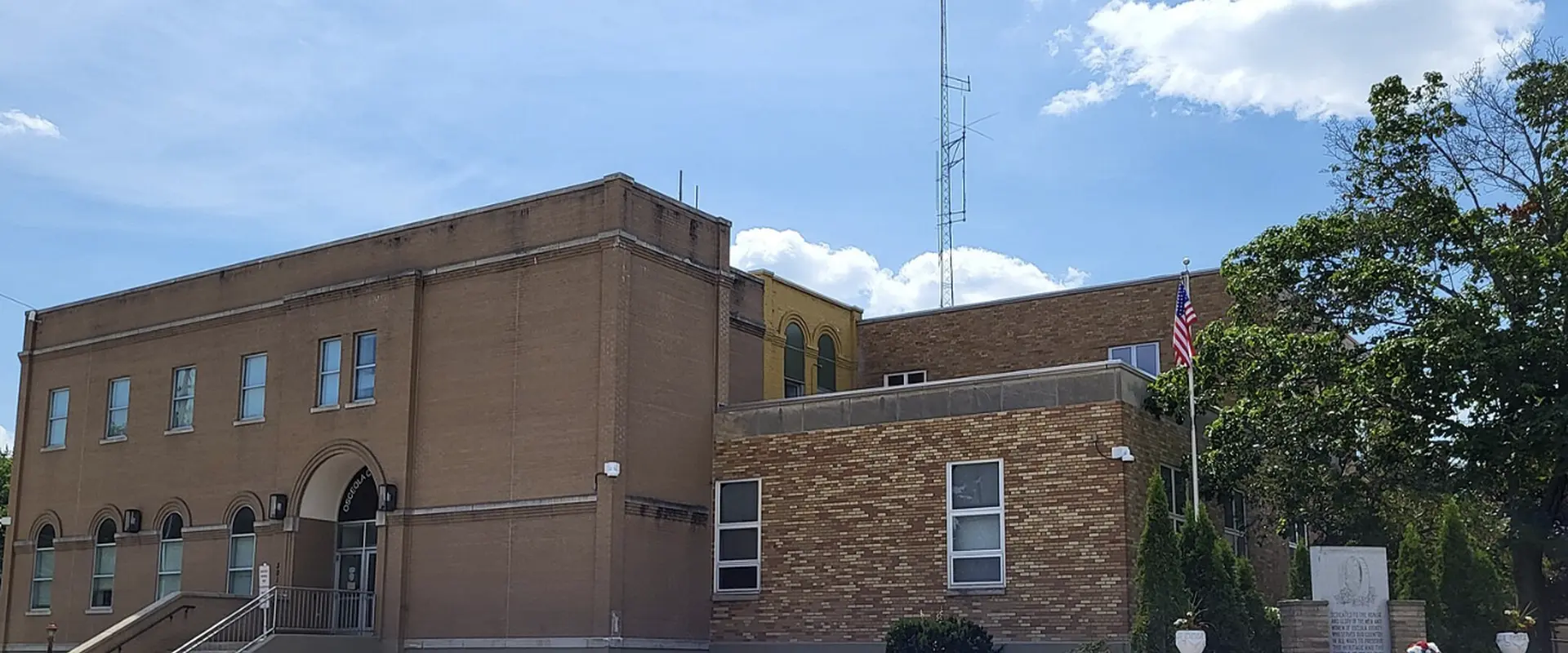
Residents who need a certified copy of a court file, an old file, or a file that does not appear online should visit the County Clerk's office at the Osceola County Courthouse to submit their requests in person. At the clerk's office, staff may help obtain physical case files, archived documents, and certified copies, which may be needed for legal or financial purposes. It is recommended to bring case identifiers, such as case numbers, party names, filing dates, and any other information that could help locate the records in question.
 Archived Records
Some older Osceola County court records are still available in paper format or stored in archives maintained by the County clerk. When looking for archived historical records, individuals should check the Archives of Michigan, an indispensable source of statewide court records, especially those related to the circuit and probate courts, with court files dating from 1870 to 1971, and for the probate court up to 1983. Some archival materials are available on Michiganology, the digital state archives.
Overview of the Osceola County Court System

The Osceola County court system is part of the unified Michigan court system. The statewide court structure has three levels: the Supreme Court, the Court of Appeals, and the Trial Courts. The Michigan Supreme Court is the state's highest court, with the final say in Michigan state-law appeals and in the court system's self-governance. Underneath it is the Michigan Court of Appeals, which deals with appeals from trial courts.
Osceola County's local trial courts include the 49th Circuit Court, the 77th District Court, and Probate & Family Court. The 49th Circuit Court and Probate District 18 have the approval to serve both Osceola and Mecosta Counties. The county's 49th Circuit Court is a general trial court for felony criminal cases and major civil cases, family cases, personal protection orders, and other appeals. The 77th District Court handles lower-level civil claims, traffic violations, landlord-tenant disputes, small claims, and certain preliminary felony matters. Probate & Family Court manages probate matters, such as estate administration, wills, trusts, and guardianships, as well as juvenile cases.
Types of Courts in Osceola County, Michigan
 Circuit Court
The 49th Circuit Court is the top trial court that serves Osceola County, and it has jurisdiction over the most severe criminal cases, the most complex civil cases, family law matters, and all other cases that only a circuit court can handle. The Family Division also handles matters involving children and domestic relations issues.
The jurisdiction of this court includes the following types of cases:
- Civil lawsuits exceeding $25,000
- Personal Protection orders, for example, in cases of domestic violence
- Divorce cases
- Felony level criminal cases
- Child custody and support disputes
- Appeals from the 77th District Court
Primary location: Osceola County Courthouse, Reed City
 District Court
The 77th District Court serves Osceola and Mecosta Counties. Residents have more contact with this court than with the other trial courts in the county, since it handles a variety of smaller civil and criminal cases that affect the everyday lives of people in the county. It has exclusive jurisdiction over civil claims and conducts preliminary examinations in felony cases to be transferred to the Circuit Court for resolution.
Jurisdiction includes:
- Civil claims of up to $25,000
- Small claims cases in which the amount in controversy is up to $7,000 (under the small claims division)
- Mortgage foreclosures
- Garnishments
- Eviction proceedings
- Misdemeanors (with a one-year maximum punishment period)
- Traffic violations
Primary location: Osceola County Courthouse Annex, Reed City
 Probate & Family Court
Osceola County Probate & Family Court is part of the 18th District Court, which serves Mecosta and Osceola Counties. It addresses various legal matters concerning the deceased's property and estate. It also deals with family disputes and protective cases. Also, this court handles guardianship and other mental health-related matters.
Probate & Family Court deals with the following issues:
- Estate administration
- Probate of wills
- Trust registration
- Neglect, abuse, and dependency matters involving children
- Delinquency matters
- Juvenile probation
- Adoption cases
- Mental health commitments and protective proceedings
- Guardianship over minors and incapacitated adults
Primary location: Osceola County Courthouse, Reed City
How to File a Case in Osceola County

To effectively file a case in Osceola County, one must follow the general filing procedure to avoid common filing errors, such as filing with the wrong court and incomplete documentation. This is important because it will help avoid delays, case dismissal, or additional costs. The following are the steps for filing a case in Osceola County.
Step 1: Choose the Correct Court
Filers should begin by determining the appropriate court with jurisdiction over their matter. A civil lawsuit seeking damages in excess of $25,000, a case to be tried as a felony, or a child custody and support case should be brought to the Circuit Court. Lesser-value civil cases, misdemeanors, traffic matters, evictions, and small claims should be brought in the District Court. Probate matters, including issues of estate administration, probate of wills, and guardianship, should be filed with the Probate Court in the county.
 Step 2: Complete Required Forms
There are required filing forms that must be completed, and they vary depending on the nature of the case and the court. There are statewide court forms available through the Michigan Courts forms web page, and those with probate matters in the county can use the Osceola County Forms & Worksheets page to access local probate forms. They should provide accurate information and include required signatures and supporting documents to avoid filing rejection.
 Step 3: File the Case
Having put together the necessary documents, the filing party can then make submissions to the County Clerk. Electronic filing is allowed through the MiFILE system or in person at the Osceola County Courthouse, depending on the type of case being filed. After the filing is accepted, the case will be assigned a case number, which should be kept safe for future reference.
 Step 4: Pay Filing Fees
Most civil court filings require a fee, and the fee amount differs from case to case. There are Michigan Circuit Court fees and Fees in the County Clerk's office for family law matters. Filing fees need to be double-checked with the clerk's office, as these might change. Those who cannot afford the required court costs can apply for a fee waiver by filling out the fee waiver form with the court. However, they should provide proof of financial difficulties.
 Step 5: Serve the Other Party
Once a case is filed, the other party must be served with the appropriate official notice. In Michigan, service can be effected by the sheriff, certified mail, or an authorized private process server. The proof of service must be filed with the court for the judge to confirm that the service was properly completed. Without the proof, the court may not proceed with the case.
 Step 6: Monitor the Case
The parties should constantly review the case after the filing and service have been done. This ensures that they don't miss important information, such as the hearing date, case order, case response, case motion, or any related deadlines. This can be done online via the MiCOURT Case Search or by contacting the clerk's office for assistance.
Osceola County Courthouse Directory
Osceola County Courthouse 1 (49th Circuit Court )
Reed City
Address: 301 W. Upton, Reed City, MI 49677
Phone: (231) 832-3261
Osceola County Courthouse Annex (77th District Court and Probate & Family Court)
Reed City
Address: 410 W. Upton, Reed City, MI 49677
Phone: (231) 832-6124
Legal and Self-Help Resources
Legal and self-help resources in Osceola County are accessible to residents, including those with low income, seniors, veterans, the disabled, and pro se individuals, for handling various legal matters and requiring assistance. Some of the organizations and programs offering legal assistance include:
- Michigan Legal Help, an exclusive nonprofit legal organization, provides legal assistance resources to self-represented individuals who need guidance with their case. It provides legal forms for various cases, including family law, eviction, disability benefits, and civil matters, and offers guidance on handling them through its self-help resource library.
- Legal Aid of Western Michigan (LAWM) offers legal representation, advice, and brief services to low-income residents, serving 17 counties in the state with five offices in different cities, including Osceola County through the Grand Rapids Office. LAWM helps with housing, consumer, public benefits, employment, education, and family law matters across the state.
- Veterans Legal Services, through its office in Reed City, designated as a local veterans' resource, provides legal help to veterans and their eligible family members on various matters, including housing, public benefits, employment, disability compensation, and mental health.
FAQs
How do I search for a criminal case in Osceola County?
Citizens can search for a criminal case in Osceola County online via the MiCOURT Case Search, which can be initiated through the accused person's name or the case file number. If the information is not found online, they can visit the county courthouse to submit their request in person or contact the clerk's office for guidance, as the case may be restricted from public access.
Are court records public in Osceola County?
A majority of the Michigan court records, but not all, are available to the public. Certain cases remain restricted, for example, juvenile cases, adoption, mental health, guardianship, and other private records. Also, a judge has the authority to seal records under certain circumstances. These records are seen as confidential and may be sealed and restricted to protect privacy.
When is it helpful to use a third-party records finder?
Access to a third-party records search can be beneficial when the person lacks sufficient information about a case and is unsure which court considered it, or when the person is conducting a search for public court records across numerous jurisdictions. Through CourtCaseFinder, users can easily search court records from across the state and even nationwide.
Other Counties in Michigan
- Alcona
- Alger
- Allegan
- Alpena
- Antrim
- Arenac
- Baraga
- Barry
- Bay
- Benzie
- Berrien
- Branch
- Calhoun
- Cass
- Charlevoix
- Cheboygan
- Chippewa
- Clare
- Clinton
- Crawford
- Delta
- Dickinson
- Eaton
- Emmet
- Genesee
- Gladwin
- Gogebic
- Grand Traverse
- Gratiot
- Hillsdale
- Houghton
- Huron
- Ingham
- Ionia
- Iosco
- Iron
- Isabella
- Jackson
- Kalamazoo
- Kalkaska
- Kent
- Keweenaw
- Lake
- Lapeer
- Leelanau
- Lenawee
- Livingston
- Luce
- Mackinac
- Macomb
- Manistee
- Marquette
- Mason
- Mecosta
- Menominee
- Midland
- Missaukee
- Monroe
- Montcalm
- Montmorency
- Muskegon
- Newaygo
- Oakland
- Oceana
- Ogemaw
- Ontonagon
- Oscoda
- Otsego
- Ottawa
- Presque Isle
- Roscommon
- Saginaw
- Saint Clair
- Saint Joseph
- Sanilac
- Schoolcraft
- Shiawassee
- Tuscola
- Van Buren
- Washtenaw
- Wayne
- Wexford
Table of Contents
